
Seat Belt Safety 101

Every year in the U.S., about 40,000 people die in motor vehicle crashes. For people under the age of 34, car crashes are the leading cause of death. According to the National Highway Traffic Safety Administration (NHTSA), wearing a seat belt is the single most effective means of reducing the risk of death in a crash, and has saved close to 300,000 lives since 1975.
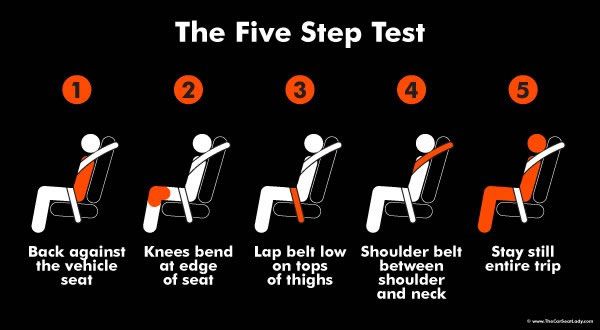 Seat Belt Safety- 5 Step Test
 In some states, not wearing a seat belt is subject to primary enforcement. That means law enforcement officers can stop you and write a ticket if they observe you not wearing a seat belt. Other states consider it as a secondary enforcement, in which case police officers can only write a seatbelt violation ticket if they stop you for another primary violation, such as running a red light or speeding. Either way, the easiest way to avoid a penalty is by always wearing your seat belt.
State laws also vary for wearing seat belts while riding in a taxi or limo. Most states do not require wearing a seat belt while riding in the back seat. However, limos and taxis are not immune from an
It only takes a few seconds to buckle up. Do it every time you get in a moving vehicle, make sure it fits properly, and get to where you want to go safely. The life you save could be your own.
This blog post was contributed by Fix Auto San Francisco - South of Market, a leading industry expert and collision repair shop servicing the Southern San Francisco neighborhoods including Mission Bay, Rincon Hill, and South Beach areas.
In some states, not wearing a seat belt is subject to primary enforcement. That means law enforcement officers can stop you and write a ticket if they observe you not wearing a seat belt. Other states consider it as a secondary enforcement, in which case police officers can only write a seatbelt violation ticket if they stop you for another primary violation, such as running a red light or speeding. Either way, the easiest way to avoid a penalty is by always wearing your seat belt.
State laws also vary for wearing seat belts while riding in a taxi or limo. Most states do not require wearing a seat belt while riding in the back seat. However, limos and taxis are not immune from an
It only takes a few seconds to buckle up. Do it every time you get in a moving vehicle, make sure it fits properly, and get to where you want to go safely. The life you save could be your own.
This blog post was contributed by Fix Auto San Francisco - South of Market, a leading industry expert and collision repair shop servicing the Southern San Francisco neighborhoods including Mission Bay, Rincon Hill, and South Beach areas.
Seat Belt Safety Facts
Without question, buckling up the seat belt is the most important safety measure for drivers and passengers in any kind of moving vehicle. Seat belts provide the best defense against impaired, aggressive, and distracted drivers. Research has shown that when used correctly, seat belts can significantly lower the risk of fatal and moderate-to-critical injuries in car accidents. They can:- Reduce the risk of fatal injury to front-seat car passengers by 45%
- Reduce the risk of moderate-to-critical injury to front-seat car passengers by 50%
- Reduce the risk of fatal injury in light trucks by 60%
- Reduce the risk of moderate-to-critical injury in light trucks by 65%
Best and Worst Seat Belt Usage By State
According to the NHSTA, the following states led the way in seat belt usage in 2017:Hawaii – 96.9%
Oregon – 96.8%
California – 96.2%
Washington – 94.8%
Minnesota – 94.7%
Michigan – 94.1%
New Jersey – 94.1%
Illinois – 93.8%
These states had the lowest rates of seat belt usage in 2017:New Hampshire – 67.6 %
Massachusetts – 73.8%
South Dakota – 74.8%
Montana – 76%
Mississippi – 78.8%
North Dakota – 79.3%
Arkansas – 81%
Idaho – 81.2%
The good news is that 31 states showed an increase over 2016 in their seat belt safety usage. The other 19 either stayed the same or showed a decrease.Seat Belt Safety Tips for Adults
Every adult should know the proper way to strap into today’s seat belts. The shoulder harness should be worn comfortably tight across the shoulder and chest, with only a minimal amount of slack. The lap belt should be fastened snug and low across the hips. Never wear the shoulder harness behind your back or under your arm, or any other improper way, as this can increase the risk of injury in a crash. Pregnant women should secure the lap belt underneath the “baby bump” and across their hips. The shoulder harness should go across the chest, away from the neck, and to the side of the belly instead of across it. Remember that the primary purpose of the seat belt is to keep you secure in your seat to minimize injury in the event of a crash. Airbags may offer additional protection. But, never use them as a substitute for seat belts.Teaching Your Kids to Use Seat Belts
Most states require young children to ride in a properly restrained car seat until they reach a certain age, height, and weight, these laws vary by state. Children typically grow into wearing an adult seat belt between the ages of eight and 12. Some may reach the required weight and height requirements earlier. These vary from state to state, so check with your state DMV office before switching to an adult seat belt. To determine a child’s readiness to switch from a booster seat to a regular belt, try the seat belt safety 5-step test. Seat Belt Safety- 5 Step Test- Have the child sit with their back firmly against the vehicle seat
- Their knees should bend at the edge of the car seat when their backs and bottoms are against the back of the seat
- The vehicle lap belt should fit across the upper thighs
- The shoulder belt should fit across the shoulder and chest
- Make sure the seat belts keep the child from moving forward or sideways throughout the trip
Teens and Seat Belts
Here’s another disturbing seat belt safety fact. According to the Department of Motor Vehicles (DMV), auto accidents are the leading cause of death for 15-to-20-year old’s in the U.S. Yet, teen drivers are the least likely to buckle up when riding in the car. They have many excuses for not wearing a seat belt, including “it’s not comfortable” or “it doesn’t look cool.” But, the most common reason is simply, “I forgot.” The best way to make sure teens remember is to begin educating them about the importance of seat belt safety before they start driving. For example:- Promote awareness by making sure your teens see you put on a seat belt every time you get in the car.
- Reinforce good behavior by making sure they are buckled up before putting the vehicle into gear.
- Constantly talk about how seat belts reinforce safety while in the car.
Seat Belt Laws by State
Under federal law, all vehicles (except buses) are required to have a three-point restraint system that consists of a lap belt and shoulder belt. This restraint system must be worn by the driver and anyone else sitting in the front seat. Beyond that, seatbelt laws are regulated by states, and they vary significantly from one state to another. Seatbelt safety fact: New Hampshire is the only state that does not make it against the law to drive without wearing a seat belt. All the other states do, although the degree of the infraction depends on the state.
In some states, not wearing a seat belt is subject to primary enforcement. That means law enforcement officers can stop you and write a ticket if they observe you not wearing a seat belt. Other states consider it as a secondary enforcement, in which case police officers can only write a seatbelt violation ticket if they stop you for another primary violation, such as running a red light or speeding. Either way, the easiest way to avoid a penalty is by always wearing your seat belt.
State laws also vary for wearing seat belts while riding in a taxi or limo. Most states do not require wearing a seat belt while riding in the back seat. However, limos and taxis are not immune from an
It only takes a few seconds to buckle up. Do it every time you get in a moving vehicle, make sure it fits properly, and get to where you want to go safely. The life you save could be your own.
This blog post was contributed by Fix Auto San Francisco - South of Market, a leading industry expert and collision repair shop servicing the Southern San Francisco neighborhoods including Mission Bay, Rincon Hill, and South Beach areas.


